Home/ESG & Sustainability

Our Impact · Environmental, social and governance

Responsibility, built into the model.

3

Pillars of the ESG framework

10

UN goals mapped to practice

2019

Reduce, Reuse, Recycle launched

2010

IFC top MENA governance case study

Why it matters

An unusual power
to do good.

As Egypt's largest private education group, CIRA holds an unusual opportunity to drive positive change. Its influence spans education, employment, diversity, sustainability and community engagement, which makes it a central player in promoting responsible business practice in the country. The group frames its ambition in line with Egypt's Vision 2030 and the United Nations Sustainable Development Goals, and it defines its stakeholders broadly: investors and financiers alongside government, students and parents, employees, the local community, alumni, contractors and suppliers.

The framework rests on three pillars. Environmental work runs from programmes that teach students responsibility for the planet through to corporate action on carbon, green technology and eco friendly daily practice. Social responsibility means inclusivity, diversity and social equality inside and beyond the group's facilities. And corporate governance means transparent policies, accountability mechanisms and ethical decision making, overseen by dedicated board members.

Sustainability growing out of education
"Community empowerment that returns something to every stakeholder."

The goals

Ten goals, mapped to practice.

CIRA maps its sustainable development framework onto ten of the United Nations Sustainable Development Goals, and attaches concrete practice to each: from training student mothers for teaching careers to treated wastewater irrigation, solar and LED technology in every new facility, and an equal opportunity policy enforced group wide.

No PovertyGood Health and Well BeingQuality EducationGender EqualityClean Water and SanitationDecent Work and Economic GrowthInnovation and InfrastructureReduced InequalitiesSustainable Cities and CommunitiesPartnerships for the Goals

In practice

Systems, not slogans.

Construction

The ESMS

An Environmental and Social Management System governs all construction, complying with national regulation, the EBRD Performance Requirements and the IFC General EHS Guideline, with screening criteria that carry the standards through contractors and subcontractors.

Standards
EBRD and IFC aligned
Reach
The whole supply chain

Campus resources

Water, energy, green space

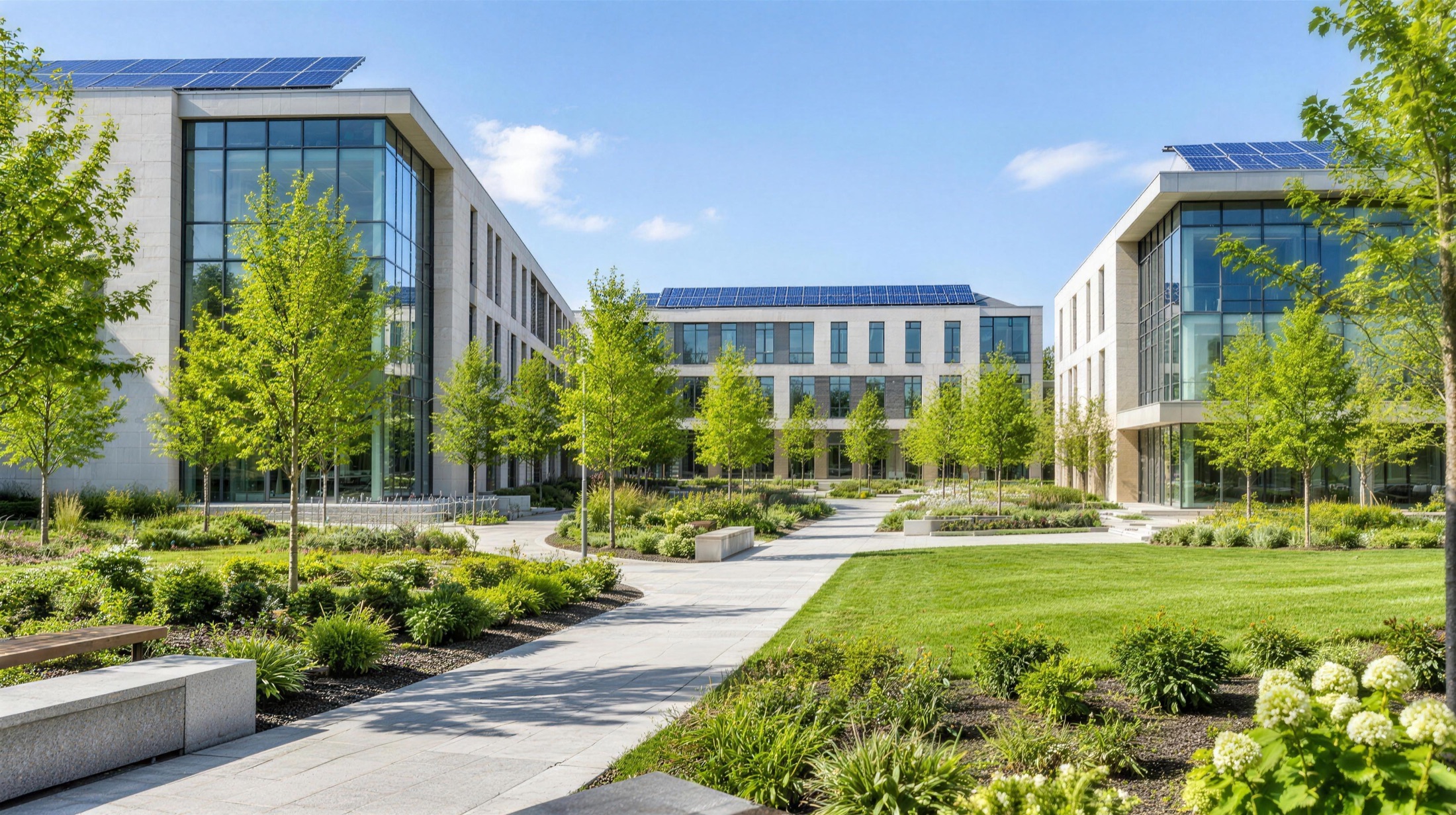
Treated wastewater irrigates landscapes, UV systems treat water at BUC, all new facilities carry LED and solar technology, and a share of every school's premises is allocated to green space that doubles as a classroom.

New facilities
LED and solar as standard
Curriculum
Sustainability in the Character Building Course

Since 2019

Reduce, Reuse, Recycle

A reverse vending machine lets students and staff recycle in exchange for incentives, with material sold on to a local recycling enterprise, and a plan to extend the campaign group wide.

Plastic bottles collected
35,250
Cans collected
27,890
Group wide target
2028

Our people

The workplace behind the classroom.

01

Diversity and inclusivity

A culture where every individual is valued, respected and empowered, with a strict zero tolerance policy on discrimination and harassment.

02

Growing from within

Retention rates the group says outperform industry norms, with promotion from within and development routes through to a Master's Degree in International Education.

03

Family and work, together

In house day care at each school for a nominal fee, staffed by trained teachers, with nursing rooms across the great majority of premises.

04

Health and safety

A mandatory HSE manual for all staff, contractors and subcontractors, with school specific risk assessments driving management measures.

Governance

Five values, three
committees.

CIRA maintains an unwavering commitment to corporate governance, upholding transparency, accountability and ethical standards across its operations. In 2010 the International Finance Corporation selected the group as one of the top governance case studies in the MENA region, a recognition it still counts among its most important.

The board works through three committees. The Audit Committee, three independent members convening quarterly with the CEO, CFO and auditors. The Strategy and Governance Committee, overseeing project approvals and weighing risk against reward. And the Sustainability Committee, established within the board to deepen communication with development finance institutions and manage environmental and social impact. Each committee evaluates its own performance annually against targeted KPIs, and five values sit beneath the whole structure: transparency, integrity, respect, compliance and accountability.

"Sustainability standards travel through the whole supply chain rather than stopping at the group's own gate."